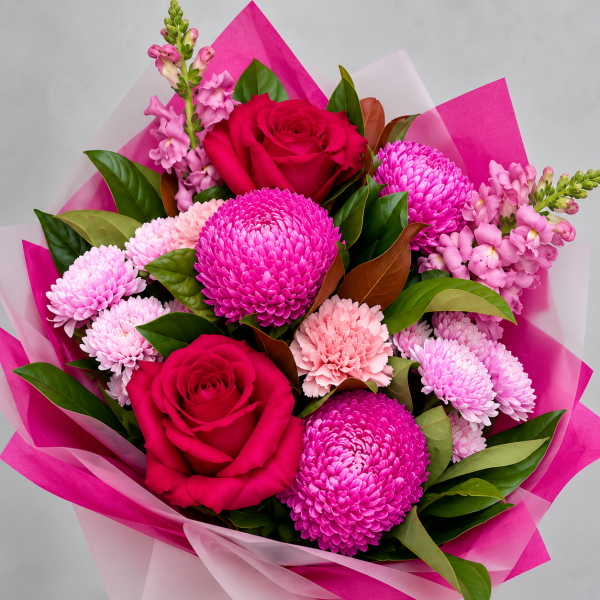

Sympathy and Funeral Flowers: What to Send, Where, and When

When someone dies, most people want to do something and are not sure what. Flowers are the usual answer, but the questions underneath are practical ones: sympathy flowers or funeral flowers, send them to the house or the service, when is too early, when is too late, and what on earth do you write on the card.
This is a plain guide from a Melbourne florist who arranges these every week. There is no single right answer, but there are some things that consistently help.
Sympathy Flowers or Funeral Flowers?
The words get used interchangeably, but they do different jobs.
Sympathy flowers go to the family, usually at home, and they are for the person who is grieving. They are meant to sit on a kitchen bench or a hall table for a week or two while the house is full of people. They are usually a vase arrangement or a hand tied bunch.
Funeral flowers go to the service, the chapel or the funeral home, and they are part of the ceremony. They are larger and designed to be seen from a distance, which is why wreaths, sprays and casket arrangements look the way they do.
If you are unsure which is wanted, sympathy flowers to the home are almost always safe. They can be sent before or after the service, and they do not need to be timed to anything.
What to Send to the Family Home
The most useful thing you can send to a grieving household is something that needs nothing from them. A vase arrangement that arrives ready to sit down is kinder than a wrapped bunch that has to be trimmed and arranged by someone who has not slept.
- Choose a vase or a box arrangement over loose stems where you can.
- Keep the scale sensible. Houses fill up quickly in the first week. Something that fits a bench is more welcome than something that needs a floor.
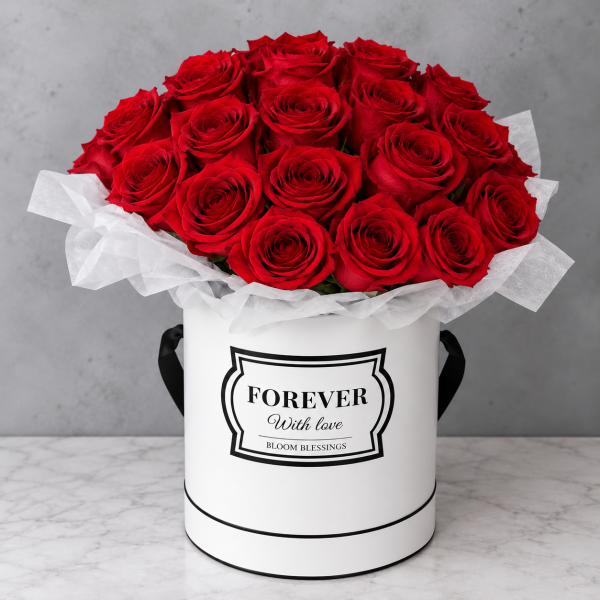
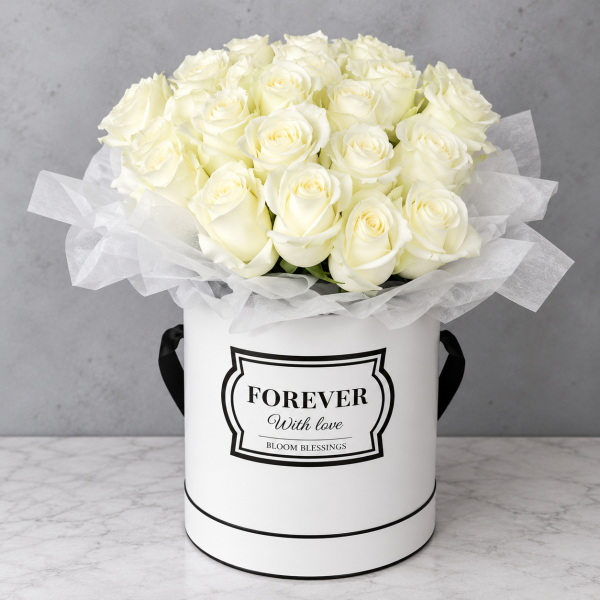
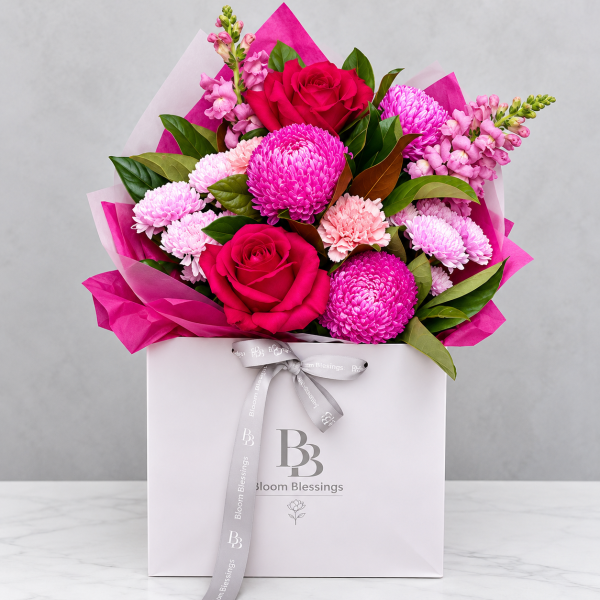
- Soft colours travel well. Whites, creams, soft greens, pale blush. Bright colour is not wrong, and for some families it is exactly right, but soft is the safer default when you do not know.
- Consider longevity. Chrysanthemums, carnations and natives will still be standing in two weeks, which matters when the house is quiet again.
What to Send to a Funeral or Memorial Service
Flowers sent to a service are usually organised by, or coordinated with, the funeral director. Before you order, it is worth checking two things: whether the family has asked for donations instead of flowers, and whether the service has a preference about arrangements.
If flowers are welcome, the common forms are standing sprays and wreaths for the chapel, and smaller posies that the family can take home afterwards. Casket flowers are traditionally arranged by the immediate family, so unless you have been asked, that is not the piece to send.
Always send funeral flowers to the funeral home or chapel rather than the family home, and always include the name of the deceased and the service time with your order, so the delivery reaches the right place at the right hour.
When to Send Them
There is more room here than people think.
- Straight away is fine. Flowers arriving the day after the news are a signal that someone noticed, and that is the whole point.
- The day of the service suits funeral flowers, timed with the funeral director.
- Two or three weeks later is often the most meaningful. The visitors have gone, the meals have stopped, and the house is very quiet. A bunch arriving then says the person has not been forgotten.
- Anniversaries and birthdays in the first year are hard, and flowers on those days are rarely unwelcome.
There is no window that closes. Late is better than not at all.
What to Write on the Card
This is the part that stops most people. Short is better than clever, and honest is better than poetic. A few that work:
- Thinking of you and your family at this time.
- With deepest sympathy. There are no right words, but you are in our thoughts.
- So very sorry for your loss. We are here whenever you need us.
- Remembering [name] with great fondness, and thinking of you all.
- With love and sympathy from all of us at [workplace].
Two things help more than any phrasing. Use the name of the person who died, because people are often afraid to and the family usually wants to hear it. And if you offer help, make it specific, an actual meal on an actual day rather than an open ended offer that the family has to organise.
Flowers People Choose, and What They Tend to Mean
- White lilies are the traditional sympathy flower, associated with peace and with the restored innocence of the soul.
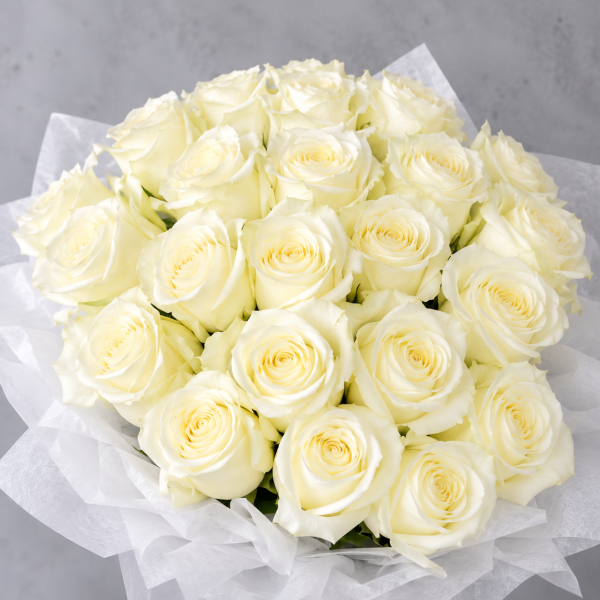
- White roses for reverence and remembrance, red for love and respect.
- Chrysanthemums carry strong funeral associations in many cultures, and are among the longest lasting cut flowers.
- Carnations for remembrance, and pink carnations in particular are often associated with a mother.
- Australian natives suit anyone who loved the bush. They also dry rather than wilt, so they can be kept.
Meanings are a guide, not a rule. If the person loved gerberas and bright yellow, send that.
A Note on Faith and Culture
Customs differ, and getting this wrong is a real worry for people. Broadly, flowers are welcome at most Christian services, are usually not sent to Jewish funerals where a donation or a visit during shiva is customary, and are not traditional at Muslim funerals. Hindu and Buddhist practices vary widely by family and community.
The safest approach is not to guess. Ask the funeral director, or ask someone close to the family. Nobody is offended by the question, and everyone is uncomfortable when the answer is assumed.
If Flowers Are Not Right
Sometimes they are not. If the family has asked for donations to a charity, do that instead and say so in a card. A meal delivered, a lawn mowed, a school run covered, or simply a message on the days when nobody else remembers, all land harder than an arrangement.
Flowers are one way of saying something. They are not the only one.
Frequently Asked Questions
What is the difference between sympathy flowers and funeral flowers?
Sympathy flowers are sent to the family, usually at home, and are meant for the people grieving. Funeral flowers are sent to the service or funeral home and form part of the ceremony. If you are unsure, sympathy flowers to the home are almost always appropriate.
Where should I send funeral flowers?
Send them to the funeral home or chapel rather than the family home, and include the name of the deceased and the service time with your order so they arrive at the right place and hour. Check with the funeral director first if you can.
Is it too late to send sympathy flowers?
No. Flowers arriving two or three weeks after a death are often the most meaningful, because that is when visitors have stopped coming and the house is quiet. There is no window that closes.
What should I write on a sympathy card?
Keep it short and honest. Something like "Thinking of you and your family at this time" is enough. Use the name of the person who died, as families usually want to hear it, and if you offer help make it specific rather than open ended.
What flowers are best for sympathy?
White lilies, white roses, chrysanthemums and carnations are traditional. Australian natives suit anyone who loved the bush and last particularly well. Soft whites, creams and greens are the safest choice when you do not know the family well.
Should I send flowers if the family asked for donations?
Follow what they asked for and make the donation. You can still send a card saying you have done so. A small arrangement to the home some weeks later is usually still welcome, but the request comes first.
Sympathy Flower Delivery Across Melbourne
We arrange sympathy and funeral flowers by hand and deliver them ourselves across Melbourne, Monday to Friday, same day when you order before 12pm. If you are sending to a service, tell us the chapel and the time in the order notes and we will work to it. You can see the range on our sympathy flowers page, or contact us if you would rather talk it through with someone.
We deliver across Eltham, Greensborough, Diamond Creek, Templestowe, Doncaster and the rest of our delivery areas.
Related Products
See all